
Mushroom Growing Kits: How They Work & Which to Choose
Mushroom Growing Kits: Quick answer
A mushroom growing kit gives UK beginners a head start by supplying mycelium, the fungus’s growing network, plus a substrate to feed it. The mycelium colonises the substrate, then fresh air, humidity and light trigger mushrooms to form. Which kit to choose depends on how hands-on you want to be. Ready-to-fruit kits arrive colonised, so they’re quickest. All-in-one (AIO) bags are simple but offer little control. Grain-to-substrate kits take longer and need more care. In return, you choose the substrate for each species, learn every stage and gain far more flexibility. Before ordering in the UK, check the box contents and growing conditions. Timings and yields vary, so treat estimates as guidance, not promises.
Which mushroom growing kit is right for me?
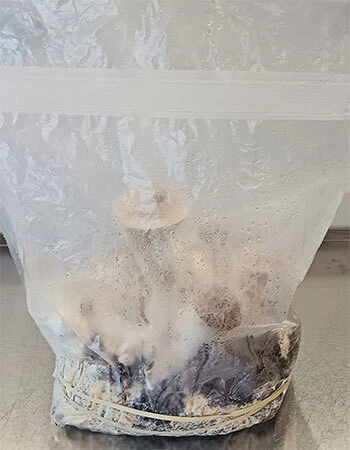
Choose the mushroom growing kit that starts at the stage you want to manage. If you’re after quick mushrooms with minimal fuss, an all-in-one (AIO) kit is probably for you [1]. If you want a new hobby that sparks your natural curiosity, an uninoculated kit is the one. I personally love watching the mycelium colonise, so it’s all I use now. There’s something deeply satisfying about being there from inoculation to harvest — plus you have more control which really helps you to feel part of the process.
A ready-to-fruit kit normally contains substrate already colonised by mycelium, the fungus's growing network. You follow the supplier's instructions to provide fruiting conditions rather than preparing and inoculating the substrate yourself. This reduces the number of stages you must manage, but it does not make the kit maintenance-free or guarantee a harvest.
Names such as “inject-and-forget”, “all-in-one” and “monotub kit” do not tell you exactly what is included or which stages are complete. Read the product description before comparing them. A container-and-substrate bundle is a different purchase from a colonised block that is ready to begin fruiting. You'll need to follow the instructions, remembering that if you are colonising grain bags to make sure the bag is fully colonised before mixing with your chosen substrate. If you think the bag is fully colonised, maybe wait an extra week for the mycelium to gain strength, this will give you better, more consistent results going forward, plus and this is a big plus, reduce your contamination risk.
If you're starting out choose smaller grain bags, they colonise faster, there is less risk of contamination and you can hone your skills more quickly. PF Tek is great for experimenting on a small scale giving you the ability to test multiple species without too much risk. The other advantage is that you can easily weed out contaminated pots or bags without too much compromise
Species choice is a separate decision. Choosing the Right Mushrooms to Grow in the UK covers that in depth; this guide focuses on choosing the kit and understanding the commitment.
Looking for a starter kit that works & keeps you involved?
Our Hypha Flux PF Tek Kit is ready for inoculation and comes with full step-by-step instructions — so you know exactly what to do & when!
What is included, and what else will I need?
Compare the complete setup, not just the product name. Two mushroom growing kits can appear similar while requiring very different extras. Before ordering, separate the items supplied in the box from those you must provide yourself.
For a ready-to-fruit product, confirm that the growing block is colonised and intended to start fruiting when you receive it. For a kit requiring an earlier cultivation stage, check whether the culture or other required growing material is included. Do not assume that a photograph of accessories means they are part of the package [2].
- Is the growing substrate included, and at what stage does it arrive?
- Are the bag, box or growing container supplied?
- Do the instructions call for a mister, humidity cover or other accessory?
- Is any additional preparation required before you can begin?
- Are clear instructions provided for this exact product?
Make a short list of missing items before choosing. A UK household with a suitable shelf and a simple care routine may have different needs from someone building a dedicated growing space. If the listing is unclear, ask the supplier for the contents list rather than buying extra equipment on speculation. This check also helps you avoid choosing a supposedly simple kit that depends on a setup you do not yet have.
Will a mushroom growing kit work in my home?
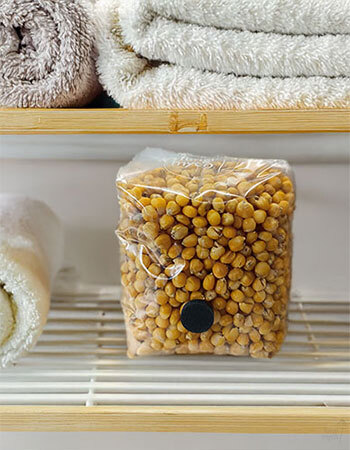
Check the conditions you can actually provide before selecting the kit. A product suited to one room may be unsuitable for another. Use the temperature and placement guidance for the specific species and kit rather than treating “room temperature” as a universal growing instruction.
In a UK home, radiators, draughts, overnight cooling and summer sunlight can make a shelf's conditions different from the rest of the room. Choose a position you can inspect easily and keep away from direct heat or strong sun unless the supplier specifically advises otherwise. Check that there is enough space for the kit and any recommended cover without blocking access.
Moisture and ventilation also need to work together. A sealed, improvised cover is not automatically helpful, and an exposed block may dry out quickly. Follow the kit's instructions rather than adding fans, bags or extra watering simply because another grower uses them.
Before buying, ask yourself whether the location is practical around cooking, cleaning, pets and everyday household activity. If someone in the household has relevant allergies or respiratory sensitivities, seek appropriate advice before choosing an indoor growing location.
For a fuller planning guide, see Setting Up Your First Mushroom Grow Space. This page's decision is simpler: choose a kit whose stated requirements match the space you already have, or plan the necessary changes first.
How much work does a mushroom growing kit take?
The best kit is one whose care routine you can maintain. Ready-to-fruit products remove much of the preparation, but you still need to check the instructions, prepare the location and monitor the kit. A format requiring inoculation or substrate handling adds stages and responsibilities before fruiting begins.
Read the care schedule before purchasing. Depending on the product, the routine may include checking moisture, adjusting the supplied cover and watching development. There is no single misting frequency that suits every block, bag and home. Use the supplier's directions as your starting point instead of adopting a fixed schedule from a different kit.
Think about your normal week. Can you inspect the kit regularly, notice drying or an unexpected change, and respond when mushrooms are ready? If you are about to travel, it may be better to delay the start rather than assume the kit can be left unattended.
For a first attempt, avoid adding complexity that does not answer a real need. You do not need to turn a straightforward kit into a larger growing system merely because the equipment is available. If you do want to move beyond the supplied setup, Comparing Fruiting Chambers and Increasing Yield with a Monotub discuss those separate decisions. Keep the initial choice focused on how much preparation, monitoring and space you are willing to commit.
If you're comfortable and have several successful grows under your belt you may want to try growing more challenging gourmet mushrooms. If you grow species that need steady, high humidity, such as lion's mane or several oyster varieties, a Martha tent is a popular step up from a kit's own bag. It is a wire shelving unit with a clear, zippered plastic cover that holds humidity around your kits, usually with a small humidifier and a hygrometer to monitor it.
Fruiting gourmet mushrooms typically want humidity in the region of 85 to 95 per cent, though the right range varies by species. The tent must also allow fresh air exchange, because a fully sealed space lets carbon dioxide build up and leads to long stems and distorted caps. Many growers add a small fan on a timer, or leave a vent open, to refresh the air. Keep the tent out of direct sun and away from radiators, and keep the humidifier and any electrical equipment clear of the wet shelves and the plastic cover. Clean the humidifier regularly and wipe down condensation, because stagnant water and constantly wet surfaces encourage contamination. A tent suits several kits at once, but a single ready-to-fruit kit usually doesn't need one, so follow your kit's instructions first.
How long until harvest, and what can I realistically expect?
Use the supplier's estimate as a range, not a deadline or guarantee. Time to harvest depends on the species, the stage at which the kit arrives, its condition and the environment you provide. A kit that must first colonise cannot be compared directly with a ready-to-fruit block.
Some ready-to-fruit kits develop quickly under suitable conditions, while others take longer. Check what the quoted timescale actually measures: dispatch to arrival, setup to first visible growth, or setup to harvest. Do not assume that a slower start means the kit has failed, but contact the supplier if progress falls outside its guidance.
Harvest quantity varies too. Ask whether a stated yield refers to one flush or the kit's possible total output. Further flushes may be possible, but their number and size are not guaranteed. Follow product-specific advice between harvests; soaking, resting or changing conditions is not appropriate for every kit.
Colonisation Timelines — What to Expect and When explains the earlier growth stage, while When and How to Harvest Your Mushrooms covers harvest decisions in more detail. Avoid leaving mushrooms indefinitely just to chase a larger yield.
When a kit is spent, follow the supplier's disposal advice and local composting rules. Do not treat an exhausted or contaminated block as a guaranteed route to another crop. For a beginner, learning how the kit develops is a more realistic goal than expecting a fixed household food supply.
What if the kit does not grow or develops a problem?
Check the instructions and contact the supplier before making major changes. An unexpected appearance or a slow start needs context: the product, species, arrival date and growing conditions all matter. A generic troubleshooting tip may be wrong for your particular kit.
Start by confirming the basics. Was the kit started at the recommended time? Is the location within its stated temperature range? Have moisture and ventilation been managed as directed? Record what you have done and take clear photographs of the block, packaging and any area of concern. These details help the supplier distinguish a care issue from a possible product problem.
Do not assume that every discolouration is harmless or that every unfamiliar growth can be identified from a photograph. If contamination is suspected, keep the kit away from food preparation and other grows, avoid opening or disturbing it unnecessarily, and follow the supplier's handling and disposal advice. Do not eat mushrooms from a suspect kit or taste growth to identify it.
For a kit that appears healthy but has not begun fruiting, Triggering Your Mushrooms to Fruit provides background on the transition. Use that as context, not a reason to override the product's instructions. Before purchasing, check how the supplier handles problems and what information its support team needs; accessible help can matter more than a confident promise of easy results.
What should I check before ordering?
Finish with a practical readiness check. Once the format, care requirements and expected outcomes make sense, confirm that the order fits your plans. Avoid buying first and discovering later that you cannot receive the parcel or provide the recommended conditions.
Ask about dispatch arrangements if you will be away. Do not assume all kits can be refrigerated, stored unopened for the same period or started whenever convenient. The instructions for the particular product should settle those questions [3].
Keep the order confirmation and product label after delivery. They make it easier to obtain the correct advice if something is unclear. Choose the kit whose requirements you understand and can meet, rather than the one making the most ambitious harvest promise.
FAQs
Yes, but check that the recipient wants to grow mushrooms and can care for the kit when it arrives. Confirm the delivery date, storage instructions and any recommended start-by date. A kit requiring prompt attention is not necessarily suitable for leaving wrapped for an extended period.
Children can observe growth and help with suitable tasks under adult supervision. An adult should read the instructions, handle any cutting or equipment, and assess unexpected growth. Keep the kit out of reach when unsupervised and do not allow children to taste unidentified material.
Follow the instructions supplied with that product. Some kits are intended to begin promptly; others have specific storage guidance. Check the packaging on arrival and contact the supplier if instructions are missing or unclear. Do not assume refrigeration or prolonged unopened storage is suitable.
Possibly, depending on its material, condition and the supplier's guidance. For the best results cultivation requires strict asceptic technique, so it may be that the equipment need sterilising in a pressure cooker or autoclave, or it could simply need wiping down with isopropyl alcohol. Do some research to find what's best for your scenario. A reusable container does not make the spent growing block reusable indefinitely. Do not transfer suspect material into another grow and check which replacement materials the next setup would require.
- Reddit — Advice on mushroom growing kits. Available at: https://www.reddit.com/r/mycology/comments/168e5uc/advice_on_mushroom_growing_kits/ (Accessed 13 October 2026).
- RHS — How to grow your own mushrooms at home. Available at: https://www.rhs.org.uk/advice/hub-content/features/grow-mushrooms (Accessed 12 October 2026).
- Hortan H — Why growing fungi at home is beginning to mushroom. Available at: https://www.theguardian.com/science/2022/nov/26/growing-fungi-home-beginning-mushroom (Accessed 14 October 2026).