

Choosing the Right Mushrooms to Grow
How to Choose the Right Mushroom Species to Grow: Quick Answer
Choosing the right mushrooms to grow shapes every practical decision that follows: substrate, temperature, fruiting timeline, and likely yield. Oyster mushrooms can produce a first flush in as little as 10–14 days on pasteurised straw. Reishi may take months and demands near-sterile conditions. The right species for your setup depends on your goals, space, skill level, and the temperature range you can realistically hold in your grow space. This guide helps UK-based growers match species to their specific situation rather than defaulting to a generic ranked list.
Understanding UK Growing Environments: Indoor, Outdoor, and Seasonal Constraints
Before settling on a species, you need an honest assessment of the environment you can actually provide. Your physical growing space determines which species are genuinely viable and which will consistently underperform or fail.
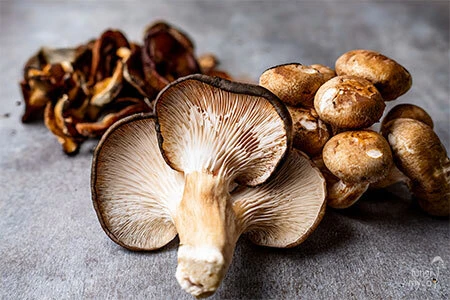
Indoor growing in a temperature-controlled spare room or grow tent is the most controllable option for UK conditions. A consistent 15–22°C removes most seasonal constraints and allows year-round cultivation of oyster varieties (particularly pearl and blue) alongside lion's mane and shiitake. Humidity management becomes your primary variable, and a basic grow tent with an ultrasonic humidifier and fan can sustain reliable fruiting across all four seasons without major investment. Enoki is worth noting separately as a genuinely cold-loving species. It colonises at typical 21–24°C indoor temperatures, but pinning requires a distinct cold drop to 10–15°C, which usually means an unheated outbuilding, a shaded shed in autumn and winter, or a dedicated fridge fruit chamber. Blocks held at typical living-room temperatures above 20°C will not pin.
Outdoor growing in the UK introduces different variables and demands species selected specifically for the climate. Shiitake and grey oyster mushrooms on inoculated hardwood logs are the most dependable outdoor choices. Logs placed in a shaded, sheltered position (a north-facing garden corner or beneath mature trees) provide the moisture retention and temperature moderation these species need. Logs inoculated in early spring typically take 12–18 months to produce a first flush, then continue fruiting seasonally for several years with minimal intervention.
Pink oyster mushrooms will prefer english summertime but struggle in the autumn and winter months. Per Stamets, pink oyster fruits reliably at 20–29°C (68–85°F) and prefers the warmer end of that range. Temperatures below this rule out reliable outdoor cultivation for most of the autumn and winter months and, in unheated indoor spaces, most of the shoulder seasons too. An unsuitable environment invariably leads to aborted pins, poor yields, or outright failure. The UK's mild, damp climate is genuinely well-suited to several species, particularly the cool-tolerant ones. Cooler British homes at 17–19°C actually suit lion's mane primordia formation (Stamets specifies 10–15.6°C for pinning) and blue oyster (comfortable at 13–18°C) very well. Understanding which species align with your specific setup is the first practical step any grower can take.
Matching Species to Your Grower Goal: A Decision Framework for UK Mycologists
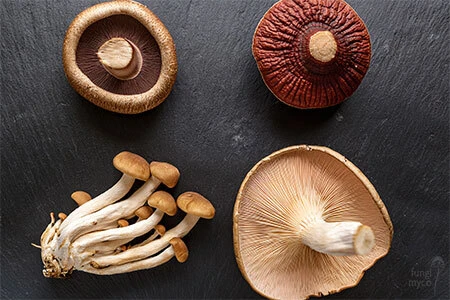
The best question to ask before choosing a species is what you actually want from this grow. Different growers come to mycology with entirely different motivations, and the species that suit a chef differ from those that suit someone interested in medicinal fungi or a gardener wanting a self-sustaining log bed. Here are four goals and the species that genuinely serve each one in the UK.
Goal 1: Fastest first harvest. Grey or golden oyster mushrooms are the answer. On pasteurised straw they colonise fast and can fruit within 10–14 days. Nothing else comes close for speed at beginner level.
Goal 2: Culinary flavour and kitchen versatility. Shiitake and king oyster mushrooms both deliver here. Shiitake has a deep, smoky umami quality that holds up to high heat. King oyster has a firm, meaty texture ideal for plant-based cooking.
Goal 3: Medicinal or functional benefit. Lion's mane is the most accessible option, associated in emerging research with cognitive and nervous system support, though this reflects traditional use and preliminary evidence rather than established medical advice. Reishi is traditionally used in East Asian herbal medicine and often described as an adaptogen, though the same caveat applies: available evidence is preliminary and not equivalent to established medical advice.
Goal 4: Long-term log cultivation. Shiitake and grey oyster mushrooms inoculated into hardwood logs in a shaded UK garden corner will fruit seasonally for years. It is the slowest start but the most self-sufficient outcome.
|
Species |
Best Goal |
Difficulty |
Avg. Fruiting Time |
|---|---|---|---|
|
Grey / Golden Oyster |
Fastest harvest |
Beginner |
10–14 days |
|
Shiitake |
Culinary / Log cultivation |
Intermediate |
8–12 weeks (blocks); 12–18 months (logs) |
|
King Oyster |
Culinary versatility |
Beginner–Intermediate |
3–5 weeks |
|
Lion's Mane |
Medicinal benefit |
Intermediate |
3–4 weeks |
|
Reishi |
Medicinal / Advanced practice |
Advanced |
3–6 months |
Substrate Preparation and Sterility: The Technical Foundations of Successful Cultivation
Once you have identified your target species, the next critical variable is substrate: what your mushrooms will actually grow on. This is where many growers encounter their first significant failures, and where a clear understanding of pasteurisation versus sterilisation pays immediate dividends.
Pasteurisation, typically achieved by soaking straw in water heated to 70–80°C for one to two hours, is sufficient for fast-colonising species like oyster mushrooms. The process reduces competing organisms without eliminating all microbial life, leaving behind a biological environment that favours rapid mycelium growth [1]. It requires no specialist equipment and is well within reach of any beginner in the UK.
Sterilisation is a different matter. Hardwood sawdust supplemented with wheat bran or oat bran should be pressure-cooked at 121°C and 15 PSI for at least 90 minutes to eliminate all competing organisms, extending to two hours for larger volumes. This is standard practice for indoor block cultivation of shiitake, lion's mane, and reishi, species with slower colonisation rates that are vulnerable to contamination if the substrate is not fully sterilised. Outdoor log cultivation relies on the bark protecting the wood interior and does not require pressure sterilisation. A pressure cooker rated to 15 PSI is the minimum requirement for indoor block work.
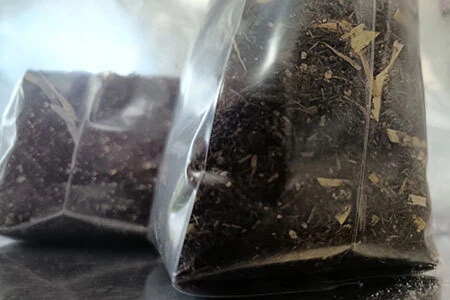
Coffee grounds deserve a specific mention. They are readily available, effectively pasteurised by the brewing process, and colonised enthusiastically by oyster mushrooms. Their high nitrogen content makes them a useful supplement in small quantities, though they should not form the sole substrate for most species due to the contamination risk that comes with prolonged moisture retention.
The Royal Horticultural Society's guidance on outdoor mushroom cultivation provides a useful reference for UK growers managing substrate selection alongside log and bed preparation in garden settings [2].
Building Your Species Progression: A Roadmap from First Flush to Advanced Cultivation
Mycology rewards patience and sequencing. The growers who progress fastest are almost never the ones who start with the most ambitious species. They are the ones who build systematically through a staged approach suited to UK growing conditions.
Stage 1: The first flush (months 1–3). Start with a grey or golden oyster grow kit. Your only job at this stage is to learn humidity management, fresh air exchange, and harvest timing. No sterilisation, no agar, no pressure cooking. These are as forgiving as cultivated species get, and a clean first flush is genuinely motivating.
Stage 2: Managing your first full cultivation cycle (months 3–12). This is where most growers' skills genuinely accelerate. Our Canopio 2 Part Grow Kit is designed specifically for this stage: it supplies pre-sterilised grain (choice of rye, millet, popcorn, or milo), CVG bulk substrate, casing layer, three pre-poured agar plates for culture observation, and a SacO₂ fruiting bag. You inoculate with your own spore syringe or liquid culture, run the full two-stage cycle from grain colonisation through to fruiting, and pick up agar transfer technique along the way. It removes the pressure-cooking hurdle for now while still teaching every skill that matters when you later work with fully self-prepared substrates. Once you are confident with the workflow, moving to self-prepared pasteurised straw or supplemented hardwood sawdust with shiitake or lion's mane as target species is the natural progression.
Stage 3: Log inoculation (year 1–2). Inoculate freshly cut hardwood logs with shiitake or grey oyster plug spawn and site them in a shaded garden corner. Expect 12–18 months before the first flush, but the multi-year harvest that follows is one of the most satisfying outcomes in home cultivation.
Stage 4: Advanced cultivation (year 2+). Introduce sterilised grain spawn, pressure cooking, agar culture work, and slow-fruiting medicinal species like reishi. At this point, your environment, substrate, and contamination management are already well-practised. UK growers considering outdoor log beds at this stage should also be mindful of responsible spent-substrate disposal. Natural England's work on England's fungal Red Listing programme provides important context on protecting native fungal communities [3].
FAQs
Oyster mushrooms, particularly grey or golden varieties, are the easiest mushrooms to grow at home in the UK. They tolerate a wide temperature range, colonise quickly on pasteurised straw or coffee grounds, and can produce a first flush within 10–14 days. They are the ideal starting point for any beginner UK grower.
Oyster mushrooms are faster, more forgiving, and thrive on simple substrates like straw. Shiitake requires sterilised hardwood sawdust or logs, a longer colonisation period of several weeks, and more precise humidity management. Shiitake offers richer culinary flavour and a longer harvest window but demands greater skill and patience from the grower.
Lion's mane is best grown indoors in the UK. It fruits reliably on supplemented hardwood sawdust, and Stamets specifies primordia formation at 10–15.6°C with fruit body development at 18–24°C, which cooler British ambient temperatures suit well. Outdoor cultivation is technically possible on inoculated logs but is not recommended: the Royal Horticultural Society advises against it on conservation grounds, since commercially available strains are typically non-native and could potentially hybridise with the endangered native populations that Schedule 8 of the Wildlife and Countryside Act 1981 was designed to protect. Indoor cultivation is the responsible route.
Most gourmet and medicinal species, including oyster, shiitake, lion's mane, reishi, and enoki, are entirely legal to cultivate in the UK. The Wildlife and Countryside Act 1981 protects certain wild native fungi from being picked or disturbed in the wild (lion's mane, for example, is on Schedule 8, the highest level of protection) , but this does not restrict home cultivation of commercially available species [4].
Lion's mane is the most accessible medicinal species for beginners, valued in traditional use and preliminary research for potential cognitive and nervous system support. It fruits reliably indoors on supplemented hardwood substrate. Reishi is traditionally used as an adaptogen but is significantly slower and harder to grow. For ease combined with functional benefit, lion's mane is the recommended starting point.
- David Moore — General principles of mushroom cultivation. Available at: https://davidmoore.org.uk/Assets/Mostly_Mycology/Richard_Clarke/cultivation.htm (Accessed 10 August 2026).
- RHS — Grow your own mushrooms outdoors. Available at: https://www.rhs.org.uk/biodiversity/grow-your-own-mushrooms-outdoors (Accessed 10 August 2026).
- UK Government — A Landmark Year for England’s Fungi. Available at: https://naturalengland.blog.gov.uk/2025/10/10/a-landmark-year-for-englands-fungi/ (Accessed 10 August 2026).
- UK Government — Wildlife and Countryside Act 1981. Available at: https://www.legislation.gov.uk/ukpga/1981/69 (Accessed 10 August 2026).