

What is Agar? Cleaner, More Precise Growing
What is agar used for in mushroom cultivation? Quick Answer
Agar work is where mycology actually gets precise. It uses a nutrient-rich gel (usually agar-agar, malt extract, and water) poured into petri dishes as a sterile surface for growing fungal cultures. Why bother? Because it lets you isolate a single strain from spores or tissue, then watch mycelium spread cleanly, without grain or substrate muddying the picture. Contamination shows up fast here, often days before it would on grain. Think of it as a testing ground rather than a growing medium: you're selecting the strongest, cleanest genetics before committing to anything larger. Skip this step and you're gambling on unseen problems downstream.
Why Agar Is the Foundation of Serious Mycology Work
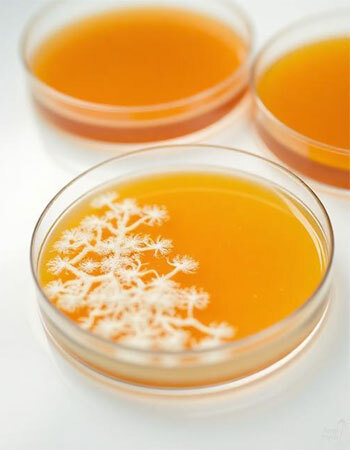
Most growers come to agar later than they should. They start on grain, lose jars to contamination, and only then discover what is agar and why it should have been their starting point all along.
Agar is a polysaccharide derived from red algae. When dissolved in hot water and mixed with nutrients, it sets into a firm, translucent gel that provides an ideal surface for fungal growth. Unlike grain or sawdust substrate, a clear petri plate lets you watch every millimetre of mycelium development. Contamination that would be invisible inside a sealed jar becomes immediately obvious on agar within days rather than weeks.
For UK hobbyists working in flats, spare bedrooms, or small garden sheds, this visibility is transformative. Every contaminated jar represents wasted time and materials. Agar acts as a quarantine and quality check in one, verifying a culture is clean before it ever touches your grain.
Not all agar recipes suit every species. The two formulations most relevant to home cultivators are Malt Extract Agar (MEA) and Potato Dextrose Agar (PDA). MEA is the general-purpose standard and should be made with light malt extract (LME) rather than dark malt, which caramelises during production and inhibits mycelial growth [1]. Stamets' standard MEA recipe is 20g light malt extract, 20g agar, and 2g yeast per litre of distilled water. Ready-made LME agar plates are a convenient alternative for growers who want to skip the preparation step, and if you'd rather mix your own, our light malt extract is milled from wheat and barley for consistent, steady mycelial growth. LME is also widely stocked in UK homebrew shops if you want to source it locally.
For growers ready to work across the full cycle rather than just the plate stage, our Canopio 2 Part Grow Kit pairs three pre-poured agar plates with pre-sterilised grain, CVG bulk substrate, and a fruiting bag. it also comes complete with online step-by-step instructions giving intermediate cultivators a structured pathway from spore or liquid culture through to first flush. PDA is a slightly richer alternative that suits nutrient-hungry mushrooms. For most UK growers working with oyster, lion's mane, or shiitake, MEA is the practical starting point: accessible, reliable, and well-suited to lean beginner technique.
How to Prepare, Sterilise, Pour, and Inoculate Agar Plates at Home
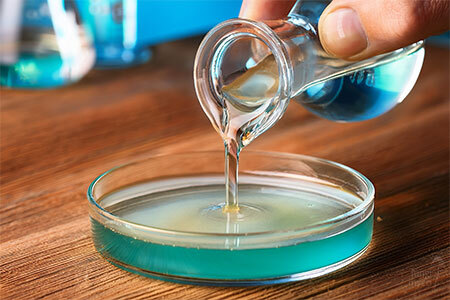
This is where most people stall. In practice, once you have done it twice, it becomes methodical. If you already have your pre-poured agar plates skip to Inoculating agar plates
The core workflow: measure agar powder and nutrients carefully; dissolve both in cold water before heating; pressure cook at 15 PSI for 30–45 minutes; cool to approximately 55°C; pour plates inside a still air box or laminar flow hood; seal immediately and allow to solidify for 30–60 minutes; store inverted, sealed with grafting tape, Parafilm, or micropore tape. On sealing choice, our grafting tape is a stretchable film originally made for plant grafting and works well as a more cost effective, accessible alternative to Parafilm. It clings to plastic or glass plates, allows the minimal gas exchange mycelium needs to develop properly, and tears cleanly by hand without scissors [2].
No pressure cooker? Tyndallisation is the fallback, though modern practice treats it as a last resort because the reliability gap is significant. The method: heat media to 100°C for 30–60 minutes, then hold at room temperature (around 20–25°C) for 24 hours so surviving heat-resistant spores can germinate, then heat again. Repeat over three consecutive days. The germinated spores are killed by the second and third heat cycles, but any bacterial or fungal endospores that fail to germinate between sessions survive intact, which is why the method is meaningfully less dependable than pressure sterilisation. Workable for lean MEA formulations on a tight budget, but a second-hand pressure cooker is a better investment for anyone planning to do agar work regularly. In the UK, cooler ambient temperatures actually help either method along; a British kitchen in autumn is a more forgiving workspace than a warm summer room, and agar sets faster when the air is cool.
Inoculating agar plates
With clean plates ready, the next question is what goes in them. There are three main inoculation pathways.
Spore syringe, swab or print: introduce spores directly onto the agar surface; each germinating colony is genetically distinct, so expect visible variation in growth rate and structure.
Tissue cloning: cut a small piece of internal tissue from a fresh fruiting body and place it onto agar, producing a genetically identical copy of the parent (a UK grower can clone a shop-bought oyster mushroom, a home-fruited lion's mane, or a market shiitake without needing spores at all) [3].
Liquid culture transfer: introduce a small volume of colonised liquid culture onto agar for detailed visual assessment and sector isolation.
For all three methods, sterile technique determines success. Flame-sterilise your scalpel until glowing, allow 10–15 seconds to cool, then work decisively. Place the inoculation point near the plate's edge so that mycelium spreading inward gives you a clear growth arc to read and assess.
Reading Your Plates, Making Transfers, and Storing Cultures
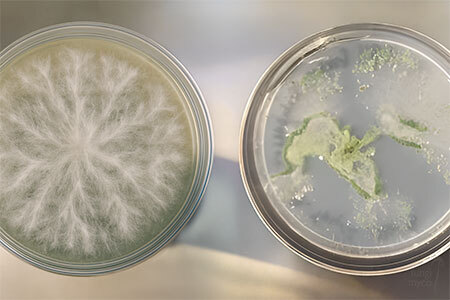
A colonised plate is not just a success. It is a data point. Healthy mycelium is white or off-white, consistent in texture, and grows outward from the inoculation point in a structured pattern. Contamination is unmistakable. Green or black patches indicate mould, typically Trichoderma or Aspergillus. Pink or orange discolouration usually indicates Neurospora, one of the most aggressive fungal contaminants in a home lab, which spreads rapidly through the air by conidia the moment a plate is opened. Yellow, wet, or slimy patches with a sour smell indicate bacterial contamination and often appear before visible growth is obvious. Any contaminated plate should be sealed and disposed of promptly.
Is my agar healthy or contaminated?
Upload a photo to the Contam Buster to get a diagnosis & recommendation — photo in, diagnosis out.
Growth morphology reveals culture character. Rhizomorphic mycelium is rope-like and fast-spreading, generally associated with greater fruiting vigour. Tomentose mycelium is dense and cloud-like, slower to advance but not inherently inferior. Species and strain context matter before drawing conclusions.
When you have identified the strongest-growing sector of a plate, transfer it. Using a sterile scalpel, cut a small wedge from that sector and place it face-down on a fresh plate. Seal, label, and incubate. Each successive transfer concentrates the most vigorous genetics, the same principle Stamets describes as sector isolation in Growing Gourmet and Medicinal Mushrooms [1].
For long-term preservation, agar slants are invaluable. Pour agar into test tubes at an angle, allow to set, inoculate, then seal and refrigerate at 2–4°C. Slants keep cultures viable for 6–18 months and act as insurance against contaminated runs or strains you want to revisit. Standard petri plates wrapped in grafting tape or Parafilm store for 4–8 weeks at the same temperature. Keep both away from light and strong-smelling foods. When ready to scale up, cut colonised agar wedges and transfer them to sterilised grain jars. Rye is the traditional gold standard for its ability to colonise evenly and consistently, with millet, popcorn, and wheat berries all common alternatives that suit different species and grower preferences.
FAQs
Agar is a natural polysaccharide extracted from red algae, particularly species such as Gelidium and Gracilaria. When dissolved in hot water and cooled, it forms a firm, translucent gel. In mycology, it is used as a solid growth medium in petri dishes, providing a stable, nutrient-rich surface on which fungal mycelium can grow and be observed.
For most UK growers working with oyster mushrooms, lion's mane, or shiitake, Malt Extract Agar (MEA) is the most practical starting point. Paul Stamets' standard recipe is 20g light malt extract (LME), 20g agar, and 2g yeast per litre of distilled water [1]. Light malt extract is widely stocked in UK homebrew suppliers. Potato Dextrose Agar (PDA) is a slightly richer alternative suitable for nutrient-hungry, wood-loving cultivars.
Yes, though it is meaningfully less reliable than pressure sterilisation. Tyndallisation involves heating media to 100°C for 30–60 minutes, holding at room temperature for 24 hours to allow surviving spores to germinate, then repeating the heat cycle. This is done over three consecutive days. It works reasonably well for lean MEA formulations and is a viable option for UK growers on a tight budget, though a second-hand pressure cooker is a better long-term investment for anyone doing agar work regularly.
Green or black patches typically indicate mould, most commonly Trichoderma or Aspergillus. Pink or orange discolouration usually indicates Neurospora, an aggressive fungal contaminant that spreads rapidly if a plate is opened. Yellow, wet, or slimy patches with a sour smell indicate bacterial contamination. Any contaminated plate should be sealed and disposed of promptly to prevent spread.
Standard petri plates sealed with grafting tape, Parafilm, or micropore tape can be stored in a refrigerator at 2–4°C for 4–8 weeks. For longer-term storage, agar slants in sealed test tubes will keep cultures viable for 6–18 months under the same refrigerated conditions. Both methods are practical for UK home cultivators looking to maintain a living culture library.
- Paul Stamets, (2000) — Growing Gourmet and Medicinal Mushrooms, 3rd edition, Ten Speed Press, 2000. ISBN 978-1580081757.
- Reddit — Why and how to use agar? A beginners guide. Available at: https://www.reddit.com/r/MushroomGrowers/comments/sdm9yb/technique_why_and_how_to_use_agar_a_beginners/ (Accessed 12 August 2026).
- Hotz E.C, Bradshaw A , Elliott C, Carlson K, Dentinger B.T.M, Naleway S.E, — Effect of agar concentration on structure and physiology of fungal hyphal systems. Available at: https://www.sciencedirect.com/science/article/pii/S2238785423009778 (Accessed 12 August 2026).