

Grow Mushrooms at Home
Growing Mushrooms at Home: Quick Answer
Growing mushrooms at home is one of the most rewarding and accessible growing projects you can take on. Unlike traditional gardening, mushrooms do not need soil, sunlight, or a garden — just the right substrate, a reliable spawn source, and a clean, stable environment. This guide covers the complete journey: from setting up your very first grow through to mastering the advanced techniques that define experienced cultivators. Whether you are just starting out or looking to sharpen a process you have been running for years, every stage of that journey is addressed here. We've structured this guide to help you build knowledge progressively, so each section connects naturally to the next.
Starting Out: What Every New Grower Needs to Know
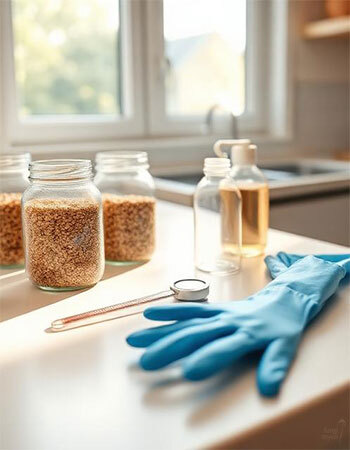
Every grower begins in the same place — curious, a little uncertain, and full of questions. That starting point is exactly right. Before committing to any particular method or species, it is worth understanding what mushrooms actually need at a fundamental level. Temperature stability, consistent humidity, and a clean working environment are the three pillars that everything else is built on. Get these right from the start, and you remove most of the variables that trip up first-time growers.
What surprises many beginners is how little equipment they actually need at the outset. The instinct is to over-prepare — to buy more kit than the situation calls for. In reality, a simple, well-managed setup outperforms an expensive one that is poorly maintained. Cleanliness is your most powerful tool early on, and it costs nothing. Understanding this early shifts your mindset from consumer to cultivator, which is the real first step.
The species you choose matters too. Some are forgiving and ideally suited to simple conditions. Others demand more precision. Starting with a beginner-friendly variety gives you the space to make small errors, learn from them, and still produce a satisfying harvest. Building that confidence early creates momentum that carries you through every stage to come.
Beyond the Basics: Moving Past the Beginner Stage
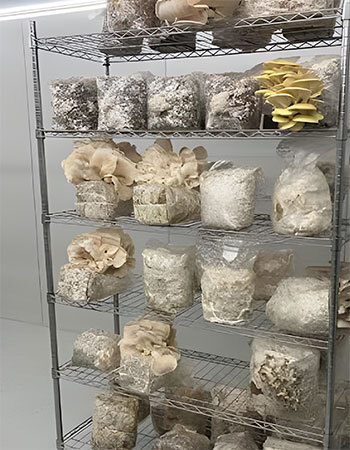
Something shifts after your first successful flush. The anxiety of the unknown gives way to genuine curiosity. You start asking different questions — not just whether it will work, but why it worked, and how you might do it better. That transition from beginner to intermediate grower is one of the most energising moments in the cultivation journey.
At this stage, the fundamentals you learned early on do not become less important. They become the platform from which you explore further. You might experiment with different substrate combinations, try a new species, or push your yields higher by adjusting your fruiting conditions. Each experiment teaches you something the previous one could not — assuming that not too many environmental factors are changed. For example, changing substrate and temperature on the same grow would make it more difficult to ascertain which were causes of variations in results.
One insight that often surprises growers at this level: understanding why a technique works gives you far more flexibility than simply following instructions. When you understand the underlying biology — why mycelium needs certain conditions to colonise, why fresh air exchange triggers pinning — you can adapt intelligently when things do not go to plan. That conceptual understanding is what separates a grower who follows recipes from one who can improvise.
Progress at the intermediate stage is rarely linear. You will have excellent grows and frustrating ones. Both are equally valuable.
Raising the Bar: Advanced Methods for Serious Home Growers
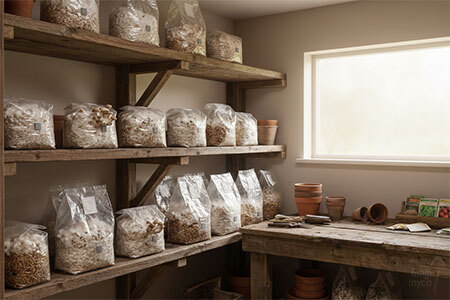
There comes a point where repeating what you know no longer satisfies. You want more: greater consistency across multiple grows, higher yields per flush, or the ability to cultivate species that demand more exacting conditions. Reaching this level is not simply about learning new tricks — it requires a fundamental shift in how you think about cultivation.
Advanced growers approach each grow cycle as a data set. They track temperature fluctuations, note deviations in colonisation rates, and record observations about pin formation and harvest timing. This systematic mindset is what allows them to identify meaningful patterns rather than attributing outcomes to luck. The surprising truth at this level is that complexity is not the goal. Precision is. Often, the most sophisticated growers operate remarkably streamlined setups — because they have stripped away everything that does not directly improve results.
Demanding species become accessible once you understand how to engineer the exact conditions they require. Techniques like agar work, liquid culture propagation, and grain-to-grain transfers open up significant new territory. These methods sound intimidating at first. In practice, they become routine quickly — and the results they enable are transformative.
Creating the Right Environment for Every Stage of Growth
The space where you grow has as much influence on your outcomes as the method you choose. Mushrooms are acutely sensitive organisms. Minor shifts in temperature, small changes in how frequently you exchange fresh air, and even the quality of light reaching your fruiting chamber can all influence whether a grow succeeds or stalls.
What many growers do not initially appreciate is that the environmental requirements change across the cultivation cycle. Colonisation and fruiting demand quite different conditions. The temperature range that encourages mycelium to run through a substrate is often cooler than the conditions that trigger vigorous pinning. Treating these as a single environment to maintain, rather than two distinct phases to manage, is one of the most common intermediate-level misunderstandings.
Small, deliberate changes to your setup can produce disproportionately large improvements. A more accurate hygrometer, a slightly adjusted fan timer, or relocating your fruiting chamber away from a draughty window — any one of these tweaks can meaningfully improve your results. The relationship between environment and outcome is a skill that compounds over time. Every adjustment you make teaches you something that informs every future grow.
Sustaining Progress: Thinking Long-Term About Your Home Grow
Achieving a good harvest feels excellent. Achieving good harvests reliably, cycle after cycle, is something else entirely. That kind of consistency does not happen by accident. It is the result of honest reflection — looking at each grow not just to celebrate what went right, but to understand what could have been better.
Growers who sustain high-quality results over many cycles tend to share one habit: they treat every grow as a source of information. Not every flush will be spectacular, and that is not the goal. The goal is to extract something useful from each one — a clearer understanding of your environment, a refined sense of when to harvest, or a better intuition about what early contamination looks like before it takes hold. This cumulative knowledge is experience-bound — meaning it is likely not possible to acquire from theory alone. It must be earned through direct experience.
Here in the UK, seasonal temperature variation affects home growing environments more than many growers initially expect. Rooms that hold steady through spring and summer can swing considerably in winter. Growers who plan for this — rather than reacting to it — maintain far more consistent results year-round.
Long-term progress is also about enjoyment. When you understand your setup deeply, troubleshooting becomes faster and less stressful. Problems feel like puzzles rather than failures. That shift in perspective is what keeps growers engaged and improving for years rather than months.
Your Complete Home Growing Journey
Growing mushrooms at home is a journey with a clear beginning, a rewarding middle, and a long horizon. Every stage — from those first uncertain steps as a beginner through to the confident, systematic approach of an advanced cultivator — has something genuine to offer. The process teaches patience, observation, and a kind of engaged attentiveness that is rare in most hobbies.
What makes this journey particularly compelling is that the learning never really stops. Each grow cycle presents new variables. Each harvest, whether exceptional or merely decent, contains information that sharpens your instincts for the next one. Growers who embrace that ongoing education find the process as satisfying as the results — sometimes more so.
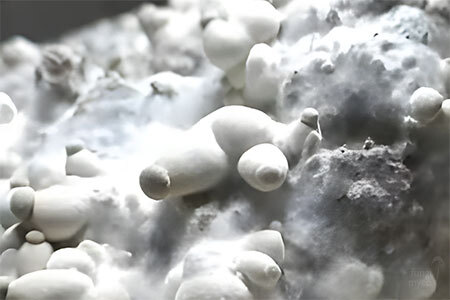
Not sure if you've got healthy mycelium or contamination?
Upload a photo to the Contam Buster — photo in, diagnosis out.
The cluster articles linked throughout this guide are designed to support you at each specific point along that path. They do not ask you to skip stages or rush past the fundamentals. Instead, they try to meet you where you are and give you exactly what you need to take the next step with confidence. Whether you are setting up your very first grow or troubleshooting a frustrating contamination issue mid-cycle, the knowledge you need is here and structured to be genuinely useful.
Frequently Asked Questions
Progress depends on how consistently you grow and how carefully you observe each cycle. Many growers feel genuinely confident after three to five grows. Each flush teaches you something new. The structured journey covered across our cluster articles is designed to accelerate that learning at every stage.
Yes, with an indoor setup you can grow mushrooms throughout the year regardless of the season. Managing your environment consistently is the key. We'll soon be providing intermediate and advanced techniques illustrating how to maintain the right conditions across different times of year and varying room temperatures.
Contamination, poor humidity control, and rushing the colonisation process are among the most frequent issues. Most mistakes are avoidable with a little preparation and patience. Our cultivation guides address these pitfalls at every level of experience, from your very first grow through to advanced technique refinement.
A good sign is when your basic grows feel repeatable and you understand why each step matters. Curiosity about yields, new species, or more efficient methods is also a strong indicator. Our guides are specifically designed to meet you at exactly the right point in your journey.