What is PF Tek and How Can I Use It?
What Is PF Tek? Quick Answer
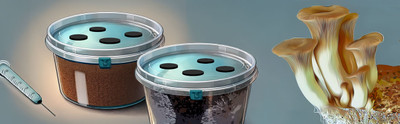
PF Tek is the most popular beginner method for growing mushrooms at home, and a sound place to start. In short, it means filling small jars with a mix of brown rice flour and vermiculite — a lightweight mineral that holds moisture — then introducing mushroom spores or liquid culture to begin the grow. From there it runs through four stages: preparing the substrate, sterilising the jars, inoculating, and fruiting. Used to grow legal gourmet species such as oyster or lion's mane, PF Tek is entirely legal in the UK.
What Does PF Tek Stand For? Origins and History Explained
PF Tek stands for Psilocybe Fanaticus Technique. It was published in the early 1990s by the mycologist Robert McPherson, who wrote under the alias "Psilocybe Fanaticus." His insight was a simple one: use small, cheap jars filled with brown rice flour and vermiculite as a self-contained growing environment. The method spread quickly through early online mycology communities, and growers have refined it ever since.
Today the technique is used almost entirely for legal gourmet and medicinal species. The name is worth knowing for context, but PF Tek has long outgrown its origins — it is now simply the standard beginner method.
Why brown rice flour and vermiculite? Brown rice flour (BRF) provides the carbohydrates and nutrients mycelium needs to colonise vigorously [1]. Vermiculite holds moisture while creating air pockets the mycelium can breathe through. Together they make a substrate that is cheap, easy to source, and well matched to a wide range of fungi.
It helps to remember that mycelium is not a plant. It is a network of thread-like hyphae that digests its substrate externally, then absorbs the nutrients. BRF gives those hyphae something nutritious to work through; vermiculite gives the network structure and hydration. Once that is clear, each step of the method makes sense rather than feeling like arbitrary ritual.
Three decades on, PF Tek remains the most accessible and reproducible way into mushroom cultivation — a case of good science meeting good design.
Is PF Tek Legal in the UK? What Every Grower Needs to Know
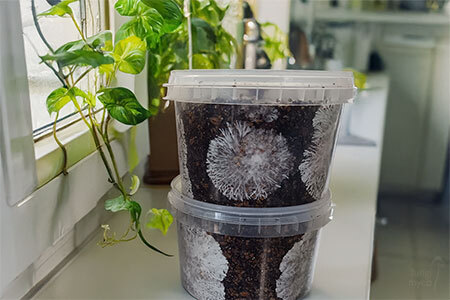
It is a common question, and it deserves a direct answer rather than a vague disclaimer. Used to cultivate legal gourmet species, PF Tek is completely lawful in the UK. Oyster mushrooms, lion's mane, shiitake, king stropharia — all legal to grow, sell and eat. The technique itself is just a cultivation method, like any other gardening practice.
The legal line sits elsewhere. The Misuse of Drugs Act 1971 classifies certain mushroom species and their active compounds as controlled substances, and cultivating those species — by any method — is a criminal offence. That distinction is firm, and it holds regardless of what overseas forums operating under different laws may say.
On spore syringes: in the UK, possessing spores for microscopy is generally legal, since spores themselves contain no controlled compounds. The legal risk arises where intent to cultivate a controlled species can be shown. If you are buying spore syringes, use a reputable UK supplier and confirm the species is legal to cultivate. Importing from overseas adds customs complications and legal ambiguity that simply is not worth the trouble.
For a cautious beginner: setting up a PF Tek grow for oyster or lion's mane is not legally grey territory at all. It is a legal, well-established and genuinely rewarding hobby.
Everything You Need and How to Grow Your First PF Tek Mushrooms
One of PF Tek's real strengths is how little it costs to begin — a first grow can be done for under £40. Here is what you need, and how to do it.
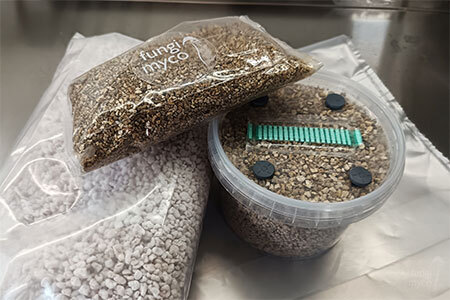
Core materials:
Step 1: Mix and Load
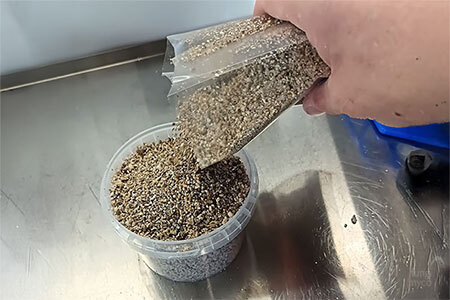
Start by preparing the lids: make four small holes spaced evenly around each one, just wide enough to take a syringe needle — a hammer and nail do this neatly. These are your injection points. Then combine 1 part BRF, 2 parts vermiculite, and 1 part water by volume. Mix until evenly moistened — the substrate should clump loosely, not drip. Fill each jar to 15mm below the rim, top with a dry vermiculite layer to create a contamination barrier, and fit the drilled lid.
Step 2: Sterilise
Cover each lid with kitchen foil to keep condensation out of the holes, then pressure cook at 15 PSI for 60–90 minutes, or steam for 90 minutes as a budget alternative. Let the jars cool fully, foil still on, before inoculating.
Step 3: Inoculate and Incubate
Work inside your still air box. Remove the foil, flame-sterilise the needle and let it cool, wipe the lid with isopropyl alcohol, and inject 1–2ml per jar, divided between the four holes. Cover the holes with micropore tape, then store at 21–24°C in darkness. Discard any jar showing green, black or pink patches straight away.
Step 4: Birth and Fruit
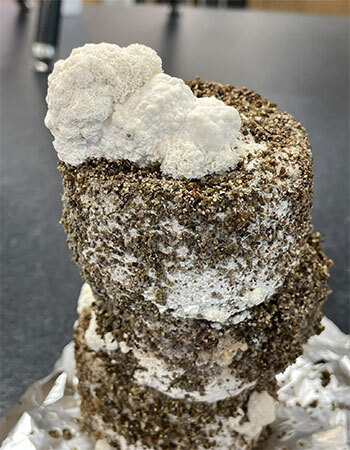
Once fully colonised, wait three to five extra days, then invert the jar and slide the cake free. Soak it in cool water for 12–24 hours, roll it in dry vermiculite, and place it in a shotgun fruiting chamber. Mist the walls two to three times a day and fan briefly each time. Harvest just before the veil beneath the cap begins to tear.
Which Mushroom Species Can You Grow with PF Tek in the UK?
More than most beginners expect — as long as you stay with legal gourmet and medicinal species, which still leaves a strong list.
Oyster mushrooms (Pleurotus ostreatus) are the best species to start a first PF Tek grow with. They colonise vigorously, tolerate minor swings in conditions, fruit readily, and their mycelium is visually unmistakable — which matters while you are still learning to tell healthy growth from contamination. Grey, golden and pink oyster varieties all do well on BRF.
Lion's mane (Hericium erinaceus) has grown popular alongside interest in its reported cognitive benefits. It colonises more slowly than oyster and is a little more sensitive to CO₂ during fruiting, but PF Tek jars suit its smaller fruiting bodies well. Start it from liquid culture rather than spores for more reliable results.
Shiitake (Lentinula edodes) is possible on BRF cakes, though it colonises slowly and gives its best yields on a harder, wood-based substrate. It is achievable for a patient beginner, but worth managing expectations on. King stropharia (Stropharia rugosoannulata) also takes to BRF, and is a good choice if you plan to move it to a garden bed later.
Every legal gourmet species worth growing is saprophytic — it digests organic matter rather than needing a living host plant — and BRF suits them well. Where PF Tek reaches its natural ceiling is with larger, heavier-yielding species such as king oyster or maitake, which reward bulk-substrate methods more than small BRF cakes.
A rough order of difficulty: oyster (easiest), then lion's mane, then king stropharia, then shiitake. Start with oyster, build your technique, and the rest follows naturally.
Frequently Asked Questions
PF Tek stands for Psilocybe Fanaticus Technique, named after the online mycologist Robert McPherson, who developed and published the method in the 1990s [2]. It uses brown rice flour and vermiculite as a substrate in small sterilised jars, and remains the most recommended beginner cultivation method worldwide.
Using PF Tek to cultivate legal gourmet mushrooms such as oyster, lion's mane or shiitake is entirely legal in the UK. Cultivating species controlled under the Misuse of Drugs Act 1971 is not. Always confirm the legal status of the species you intend to grow before buying supplies.
A typical PF Tek grow takes four to eight weeks from inoculation to first harvest. Incubation usually lasts two to four weeks depending on species and ambient temperature, followed by one to two weeks in the fruiting chamber before pins develop and are ready to harvest.
The standard PF Tek substrate ratio is one part brown rice flour to two parts medium vermiculite to one part water by volume. A dry vermiculite layer is added on top inside the jar to act as a contamination barrier between the substrate and the inoculation point.
Contamination is most often caused by inadequate sterilisation, poor inoculation technique, or damaged jar lids. Prevent it by sterilising jars thoroughly, working inside a still air box or flow hood during inoculation, flame-sterilising your needle, and wiping injection ports with isopropyl alcohol before each use.
1: DMT Nexus - BRF Cake Fruiting. Available at: https://www.dmt-nexus.me/forum/default.aspx?g=posts&t=69663 (Accessed 10 April 2026).
2: Reddit - PF Tek - A Method of Mushroom Cultivation Pioneered. Available at: https://www.reddit.com/r/wikipedia/comments/8342m9/pf_tek_a_method_of_mushroom_cultivation_pioneered/ (Accessed 4 April 2026).