
Setting Up your Mushroom Grow Space
Setting Up Your First Mushroom Grow Space: Quick Answer
Most UK homes are too dry for mushrooms — central heating kills humidity fast. Mushrooms need 80–95% humidity, but your average living room sits around 40–50%. The fix is simple: fruit them inside something enclosed. I use a clear tub with a lid, but a grow bag or tent works too. Pick a spot that stays roughly 15–24°C, give them some indirect light and fresh air, and spray the inside daily to keep things moist. You can get started for under £30. If you would rather not source it all piece by piece, our beginner grow kits help to stabilise your environment.
Choosing the Right Location: Spare Room, Airing Cupboard, Shed or Garage?
Location sets up everything else. Get it right and every other variable becomes easier to manage.
The airing cupboard is the quiet workhorse of home cultivation. It runs warm — often 20–24°C on its own — carries some residual humidity from the hot water cylinder, and keeps a grow isolated from the rest of the house. That makes it well suited to incubation, when mycelium just needs warmth and darkness to colonise its substrate. Its limitation is airflow: an airing cupboard is enclosed by design, so CO₂ builds up during fruiting. Use it for incubation, then move blocks somewhere more open to fruit.
A spare room is the most versatile choice. You can seal the gaps under the door, run a humidifier continuously, and set up proper shelving — room enough for a larger setup, or several species at once. It is where most growers end up once the hobby takes hold.
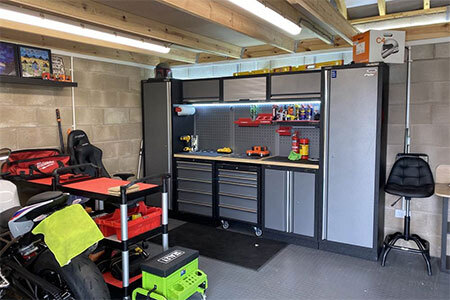
A garage or shed brings a real advantage: it is physically separate from your living space, which considerably cuts the cross-contamination risk from kitchen and bathroom mould spores. The catch is winter temperature — an uninsulated shed here can fall to 2–5°C overnight from November through February. If you go this route, insulate the walls and ceiling and fit a thermostat-controlled space heater. Lining the shed with polythene sheeting helps hold moisture too, and costs very little.
Allotment polytunnels are worth a mention as a seasonal option. They stretch the outdoor window into early winter and create a naturally humid microclimate that suits cold-tolerant species such as pearl oysters — though without supplemental heat they are not a year-round answer.
There is no universally right location, only the right one for your species and your budget.
Which Legal Edible Mushroom Species Can You Grow in the UK — and What Each Needs
It is worth being clear on the legal position first, since it is the question behind most searches. Gourmet edible species — oyster, shiitake, lion's mane and chestnut — are entirely legal to cultivate at home. Psilocybe mushrooms are Class A controlled substances under the Misuse of Drugs Act 1971 [1] and fall outside this guide. Everything below concerns legal, edible fungi.
Each species has its own preferences, and your setup should follow them.
|
Species |
Temp Range (Fruiting) |
Humidity |
Substrate |
Difficulty |
|---|---|---|---|---|
| Oyster (Pleurotus ostreatus) | 15–21°C | 85–95% | Straw, hardwood | Beginner |
| Shiitake (Lentinula edodes) | 18–22°C | 80–90% | Hardwood sawdust | Intermediate |
| Lion's Mane (Hericium erinaceus) | 18–24°C | 85–95% | Hardwood sawdust | Intermediate |
| Chestnut (Pholiota adiposa) | 16–22°C | 86–90% | Hardwood, straw mix | Intermediate |
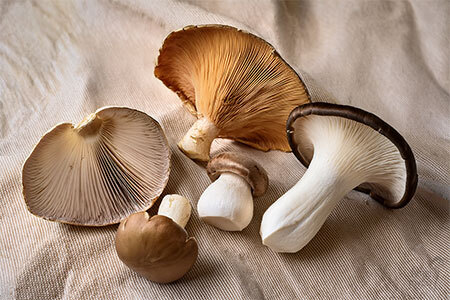
Oyster mushrooms are the natural starting point [2]. They tolerate cooler temperatures, colonise straw vigorously, and fruit prolifically with little fuss — Pleurotus ostreatus is in fact native to Britain, so it is well suited to the conditions here. For a first grow, oysters are where we would tell you to start. The Gardener's World growing guidance [3] is a sound general reference if you want a second source.
Shiitake needs a proper hardwood substrate and responds to cold-shocking — dropping the temperature by 5–8°C for 12–24 hours — to trigger pinning. It is more work, but the flavour rewards it. Lion's mane is especially sensitive to fresh air exchange: poor airflow browns the cascading spines, so keep a clip fan running.
Environment, Equipment and Contamination Control
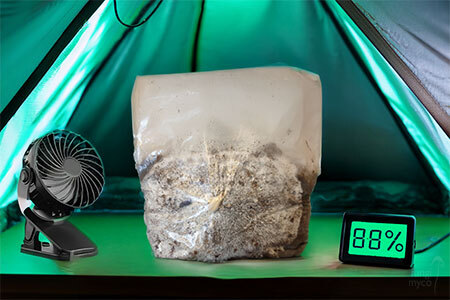
A successful grow space rests on three things working together: the right environmental conditions, equipment suited to your stage, and disciplined contamination control.
The four variables to manage are temperature, humidity, fresh air exchange (FAE) and light. Temperature should sit around 18–24°C for most edible species during fruiting, though several do better cooler, so check your species. Humidity is the real challenge in a heated home: aim for 80–95%, using an ultrasonic humidifier inside a sealed grow tent, or a spray bottle four to six times a day in a clear tote. FAE is the variable beginners most often underestimate — a build-up of CO₂ makes pins abort or stems run long and thin. A clip fan on a timer, or passive polyfill filter patches, deals with it. Light is the simplest: twelve hours of indirect, diffuse light is enough.
Equipment scales with ambition. A tier-one starter setup, under £30, needs only a clear plastic tote, a spray bottle, a combined thermometer and hygrometer, polyfill filter patches and substrate. A tier-two setup adds a small grow tent, an ultrasonic humidifier and a clip fan on a timer. A tier-three fruiting room adds a temperature controller and a pressure cooker for sterilisation.
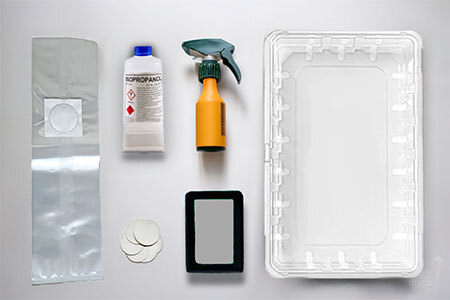
Contamination ends more first grows than any equipment failure. Before anything goes into the grow space, wipe every surface with 70% isopropyl alcohol. Homes here carry a fairly high ambient mould-spore count thanks to the damp climate, so sealing the space matters. During inoculation, work in a still air box, wear gloves and a mask, and move quickly. Learn the early signs — green or black patches, a slimy substrate surface — and isolate any affected block straight away. If you are unsure what you are looking at, our Contam Buster will identify it from a photo.
Pre-Grow Verification: Make Sure Your Setup Is Ready
Before you introduce any spores or spawn, pause. Double-check everything.
- Temperature consistency is critical. Your growing area should maintain 18–25°C without dramatic swings between night and day. Even a 5°C drop stresses mycelium. Does your space meet this standard? A basic digital thermometer (£10–15, with min/max memory) transforms troubleshooting later.
- Humidity levels matter enormously. Mushrooms fruit best at 80–95% relative humidity during fruiting. Naturally dry spaces struggle without intervention. Small humidifiers (£20–40) solve this reliably. Check yours now.
- Test your contamination control setup. Still air box? Open and close it several times — no gaps, no cracks. For spray bottles and agar work, ensure clean gloves, rubbing alcohol, and workspace are ready.
- Gather all supplies before inoculation day: spawn or spores, substrate, sterilisation equipment, vessels. Rushing to buy forgotten items mid-process compromises everything. Final checkpoint: does your species choice match your actual setup? Will oyster suit your temperature? Will shiitake work in your humidity? Mismatches create unnecessary problems.
- You're not racing toward harvesting. Get the foundation right. A solid setup pays dividends across dozens of future grows. Take one more afternoon verifying each detail.
Frequently Asked Questions
Yes. Both work well, for different grow stages. An airing cupboard's natural warmth suits incubation, while a spare room offers more control for fruiting. Seal gaps, add a small humidifier, and monitor temperature to compensate for central heating drying the air.
You can legally cultivate gourmet edible species, including oyster, shiitake, lion's mane and chestnut mushrooms. Psilocybe mushrooms are Class A controlled substances under the Misuse of Drugs Act 1971 and are illegal to cultivate in the UK.
A basic setup needs a clear plastic tote or monotub, a spray bottle, a thermometer and hygrometer, polyfill filter patches, and a straw or hardwood pellet substrate. The total can come in under £30. A grow tent and humidifier are useful additions as you scale up.
Yes. Central heating typically drops indoor humidity to 40–50%, far below the 80–95% mushrooms need to fruit. Counteract it by enclosing the grow space with a tent or tote, using an ultrasonic humidifier, and keeping the setup away from radiators and heat vents.
Clean all surfaces with 70% isopropyl alcohol before each grow cycle, use a still air box for inoculations, and wear gloves and a mask. Homes here already carry high ambient mould-spore counts due to the damp climate, so sealing the grow space and keeping good airflow discipline is essential.
1: UK Government - Misuse of Drugs Act 1971. Available at: https://www.legislation.gov.uk/ukpga/1971/38/contents (Accessed 6 March 2026).
2: Facebook - What is the easiest mushroom species to grow for a first timer? Available at: https://www.facebook.com/groups/289883209317365/posts/751979299774418/ (Accessed 6 April 2026).
3: Gardener's World - How to Grow Mushrooms. Available at: https://www.gardenersworld.com/how-to/grow-plants/how-to-grow-mushrooms (Accessed 11 April 2026).