

How to Dry and Store Homegrown Mushrooms
Drying and Storing your Homegrown Mushrooms: Quick Answer
Knowing how to dry mushrooms properly is the single most effective way to preserve a homegrown harvest. Clean fresh mushrooms with a dry brush — never wash them. Slice to a uniform 3–5mm thickness, then dry using a food dehydrator at 40–50°C for 4–8 hours, or a fan oven at 50–60°C with the door slightly ajar. Test with the snap test: fully dried mushrooms snap cleanly, never flex. Store in airtight glass jars with food-safe silica gel packets, away from steam. Browse our mushroom storage jars to extend your mushrooms' shelf life.
Preparing Homegrown Mushrooms for Drying
A glut of freshly harvested mushrooms is a wonderful problem to have — until day five, when half the basket has turned. If you grow at home in the UK, whether from a kit on your kitchen shelf or an outdoor straw bed, you already know how fast a productive flush outpaces your appetite. Learning how to dry mushrooms is the most practical solution, and it costs almost nothing. Fresh mushrooms last five to seven days in the fridge at best. Properly dried and stored, the same harvest keeps for twelve months or longer [1]. Dried mushrooms take up a fraction of the space, and their flavour intensifies as moisture leaves.
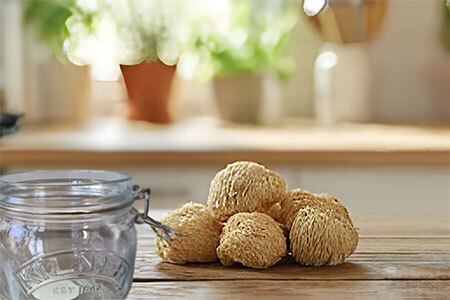
Before any heat is applied, preparation is everything — and the single most important rule is: do not wash your mushrooms. Water absorbed during rinsing must be driven out before actual drying can begin, and in the UK's already damp conditions, that added moisture creates serious problems. Instead, use a dry pastry brush, a soft cloth, or kitchen roll to remove substrate, compost, or surface debris. The Food Standards Agency recommends careful handling of fresh mushrooms before any preservation process, and dry-cleaning satisfies that standard without adding moisture [2].
Prep differs by species, and uniformity matters most:
Aim for uniform 3–5mm slices across all species. Uneven pieces are the most common prep mistake — one thick chunk under-dries and can spoil the whole jar. Good preparation is half the work of drying mushrooms successfully.
Drying Equipment and Confirming Complete Dryness
Choosing the right equipment makes the difference between a reliable result and a frustrating batch of leathery, under-dried mushrooms. For UK home growers, three options are worth understanding — one is the clear first choice, one is a solid backup, and one should be used only when conditions are right.
Food Dehydrator (Recommended)
A dedicated food dehydrator set to 40–50°C and run for four to eight hours is the most reliable equipment available to UK cultivators. Consistent, low-level airflow removes moisture steadily without cooking the mushroom or degrading flavour. Lion's mane may need the full eight hours; oyster mushrooms often finish in four. If you dry mushrooms regularly, this is the one piece of kit worth investing in.
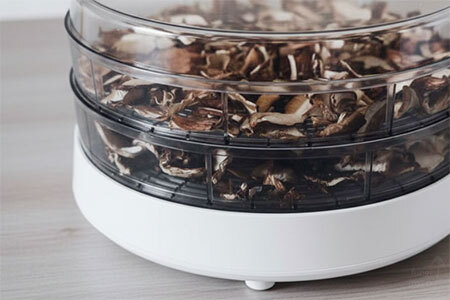
Fan Oven
A fan oven on its lowest setting — ideally 50–60°C — works well as a backup. Place sliced mushrooms on a wire rack, not a baking tray, so air can circulate underneath. Prop the door open slightly with a wooden spoon. Expect two to four hours, checking every thirty minutes after the first hour. Various sources support keeping temperatures below 60°C to protect both safety and quality.
Air Drying
During warm, dry spells (rare in the UK), string or rack mushrooms near a sunny window for 24–72 hours. Or any time of year I find that the airing cupboard is usually a good spot. The mould risk in damp British conditions is higher than many other places so be weary of bad placement.
The Snap Test
Once drying is complete, the snap test confirms readiness. Pick up a cooled piece and bend it firmly — a properly dried mushroom snaps or crumbles cleanly [3]. Any flex or leatheriness means it needs more time. Always cool mushrooms fully before testing, as residual warmth makes them feel drier than they are. Lion's mane retains moisture longest — test each piece individually and return any failing pieces to the dehydrator in thirty-minute intervals until the whole batch passes.
Storing Dried Mushrooms Long-Term: Containers, Desiccants, and UK Humidity
Britain's climate is the enemy of dried mushroom storage. Get the container and conditions right, and a well-dried harvest will last 12–18 months. Get them wrong, and you'll be opening a jar of mould by February.
Airtight glass jars are the best option — Kilner-style jars with rubber-sealed lids create a genuine barrier against moisture ingress. Avoid relying on zip-lock bags as your primary container; they're moisture-permeable over time and offer no real protection against the UK's ambient humidity. Glass, sealed properly, is the right call.
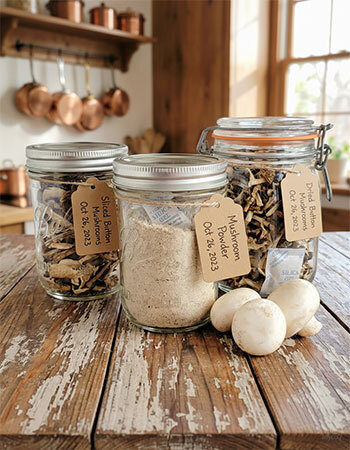
Add one or two food-safe silica gel packets to every jar. These desiccants draw out any trace residual moisture and act as a continuous buffer against humidity ingress each time the jar is opened. Use indicator-type packets if possible — they change colour when saturated. Reactivate or replace every three to six months.
Storage location matters as much as the container. A cool, dark cupboard away from steam sources is ideal. Never store above the hob or near a kettle — moisture cycling destroys dried goods faster than almost anything else. The fridge is a common mistake: condensation forms each time a cool jar meets warm kitchen air, and that moisture is absorbed directly back into the mushrooms.
Label every jar with species name and drying date. After six months, dried oyster mushrooms and dried lion's mane look remarkably similar. For bulk storage, vacuum sealing removes residual oxygen along with moisture and can extend shelf life further. Our mushroom storage jars are designed specifically for long-term UK home cultivator use — a simple upgrade that makes a genuine difference.
Making the Most of Every Harvest: Mushroom Powder and Zero-Waste Tips
Not every piece from a UK flush is picture-perfect. Some are over-dried, some are oddly shaped, some break apart during handling. None of it is wasted — it just takes a different form.
Over-dried or broken pieces are ideal for mushroom powder. A spice grinder or small blender blitzes them into a fine, intensely flavoured powder in under a minute. This is one of the most useful pantry ingredients a UK home cultivator can make — a concentrated umami hit that improves soups, stocks, rubs, and seasoning blends without requiring any rehydration.
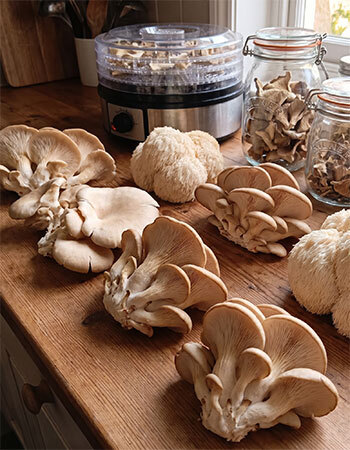
Species behave differently as powder. Shiitake produces an intensely savoury, deep powder — use sparingly. Lion's mane is milder and nuttier, excellent blended with other dried herbs. Oyster mushroom powder is versatile and works well in blended seasoning mixes. Store all powders in small airtight jars with a silica gel packet — powder is even more susceptible to moisture reabsorption than whole dried pieces.
Rehydrating whole dried mushrooms is straightforward. Cover with just-boiled water and soak for 20–30 minutes. Crucially: don't discard the soaking liquid. That amber broth is packed with released flavour compounds and makes an excellent stock base — particularly useful in autumn stews and broths, a natural fit for the UK growing season.
Shiitake stems deserve a special mention. Too tough to eat even after rehydration, they're nonetheless excellent for making mushroom stock — simmer for thirty minutes, strain, and use as you would any vegetable stock. Nothing is wasted. If you're building out your home cultivation setup, the full range of mushroom supplies at Fungi Myco covers everything from growing through to long-term preservation. And if you've got questions about your harvest or your setup, our team is always happy to help — get in touch with us directly.
Frequently Asked Questions
A food dehydrator set to 40–50°C is the most reliable method for UK home growers, delivering even airflow and consistent results. If you don't own one, a fan oven on its lowest setting (around 50–60°C) with the door slightly ajar works well. Air drying is possible but unreliable in the UK's damp climate.
Use the snap test — fully dried mushrooms should snap or crumble cleanly when bent, not flex or feel leathery. Any remaining softness or tackiness indicates residual moisture, which will cause mould in storage. Let mushrooms cool completely before testing, as warmth can make them feel drier than they are.
No — washing adds moisture that significantly extends drying time and increases the risk of mould. Instead, use a dry pastry brush or a piece of kitchen roll to gently remove any compost, substrate, or surface debris before slicing and drying. Only rinse if contamination cannot be removed any other way.
Airtight glass jars — such as Kilner-style jars with rubber-sealed lids — are the best option. Add one or two food-safe silica gel packets to absorb residual moisture, which is especially important in the UK's humid climate. Store jars in a cool, dark cupboard away from steam sources, and label with the species and drying date.
When fully dried and stored in airtight glass jars with a desiccant, homegrown mushrooms typically last 12–18 months with minimal loss of flavour or quality. UK humidity is the main risk factor — always use silica gel packets and check jars periodically for any signs of moisture reabsorption or mould.
1: PMC - Fresh Mushroom Preservation Techniques. Available at: https://pmc.ncbi.nlm.nih.gov/articles/PMC8465629/ (Accessed 19 April 2026).
2: Food Standards Agency. Available at: https://www.food.gov.uk/ (Accessed 21 April 2026).
3: Sherriffs, C. Garden Culture Magazine: Preserving Mushrooms Helps You Enjoy Your Harvest Longer. Available at: https://gardenculturemagazine.com/preserve-mushrooms/ (Accessed 21 April 2026).